- Home
- Classical Fingerstyle Portal
- 15 Actionable Guitar Lessons
- Classical Guitar Technique
- Guitar Lessons
- Beginner Lessons
- Guitar History
- The Renaissance Guitar
- Guitar Time Line
- Classical Guitar Blog
- Contact
- About Author
- Site Search
- Privacy Policy
- Site Map
- Classical Guitar Study Course 3.0
- Instant Classical Guitar Repertoire
- Classical Guitar Lessons For Beginners
Learn Classical Guitar Blog
Classical Guitar Blog - Up-to-date news and information about Guitar. We will bring you product reviews, information and timely news about topics related to Classical including best technique practices, music, composers, instrument care and much, much more.
Don't Just Get a Head Start - Get a FAST START!
One of the biggest challenges in learning to play classical guitar is to know where to start.
That's why I created the ‘Classical/Finger Style Guitar Lessons Portal’ which helps you to make a fast and logical start. You can join here...
https://www.learnclassicalguitar.com/Classical-Guitar-Fingerstyle-Portal
Oh, and did I mention - it’s FREE? 😊
Just
follow these 3 easy steps...
1. Enroll in the Classical-fingerstyle Lesson Portal here...
https://www.learnclassicalguitar.com/Classical-Guitar-Fingerstyle-Portal
2. Select the lessons you want to practice
3. Start making progress on the classical guitar
If you're really serious about learning classical guitar, you can also download your copy of...
"Ten Important Skills You Need as a Classical Guitarist" (inside the portal).
P.S. If you resonated with this idea I think you're going to love how the portal gives you an advantage and a fast start in playing classical guitar. You can join in literally seconds here...
https://www.learnclassicalguitar.com/Classical-Guitar-Fingerstyle-Portal

Classical Guitar Blog Article:
Examining the Classical Guitar's History
For ages, audiences and artists have been enthralled by the classical guitar. Musicians from many genres like it because of its alluring tone and adaptability. But one needs go into the classical guitar's deep and interesting history in order to appreciate it fully.
The oldest known forebears of the classical guitar as we know it today are steeped in antiquity. Ancient civilizations like Mesopotamia, Egypt, and Greece are where the idea of stringed instruments with resonating bodies first emerged. Different guitar-like instruments with strings that could be picked or strung together were used in these civilizations.
Ancient Mesopotamian artifacts from the time period of 2000 BCE show the existence of instruments with a long neck and strings. Wood, reed, or even priceless metals were often used to make these instruments. Similar to how we play the guitar today, they were played by plucking the strings with the fingers or a plectrum.
Moving on, we discover evidence of stringed instruments that roughly resemble the guitar in ancient Egypt. Ancient Egyptian tomb paintings and sculptures show musicians playing resonating instruments with long necks. The music played at the period for ceremonies and for religion depended heavily on these instruments.
Greece, a country renowned for its extensive cultural legacy, made a contribution to the development of the guitar as well. Greek inventors created instruments like the contemporary classical guitar, such as the kithara and lyre.
These musical instruments featured a sound hole, a wooden body, and several strings that could be plucked to make melodies. They were performed in a variety of social and artistic settings, such as social gatherings and theatrical events.
While these first guitar-like instruments set the groundwork, the guitar's modern form and traits really started to take shape during the Renaissance. From the 14th through the 17th century, there was a great era of cultural and creative advancement known as the Renaissance. It signaled a turn toward humanism and a resurgence of curiosity for classical Greek and Roman culture.
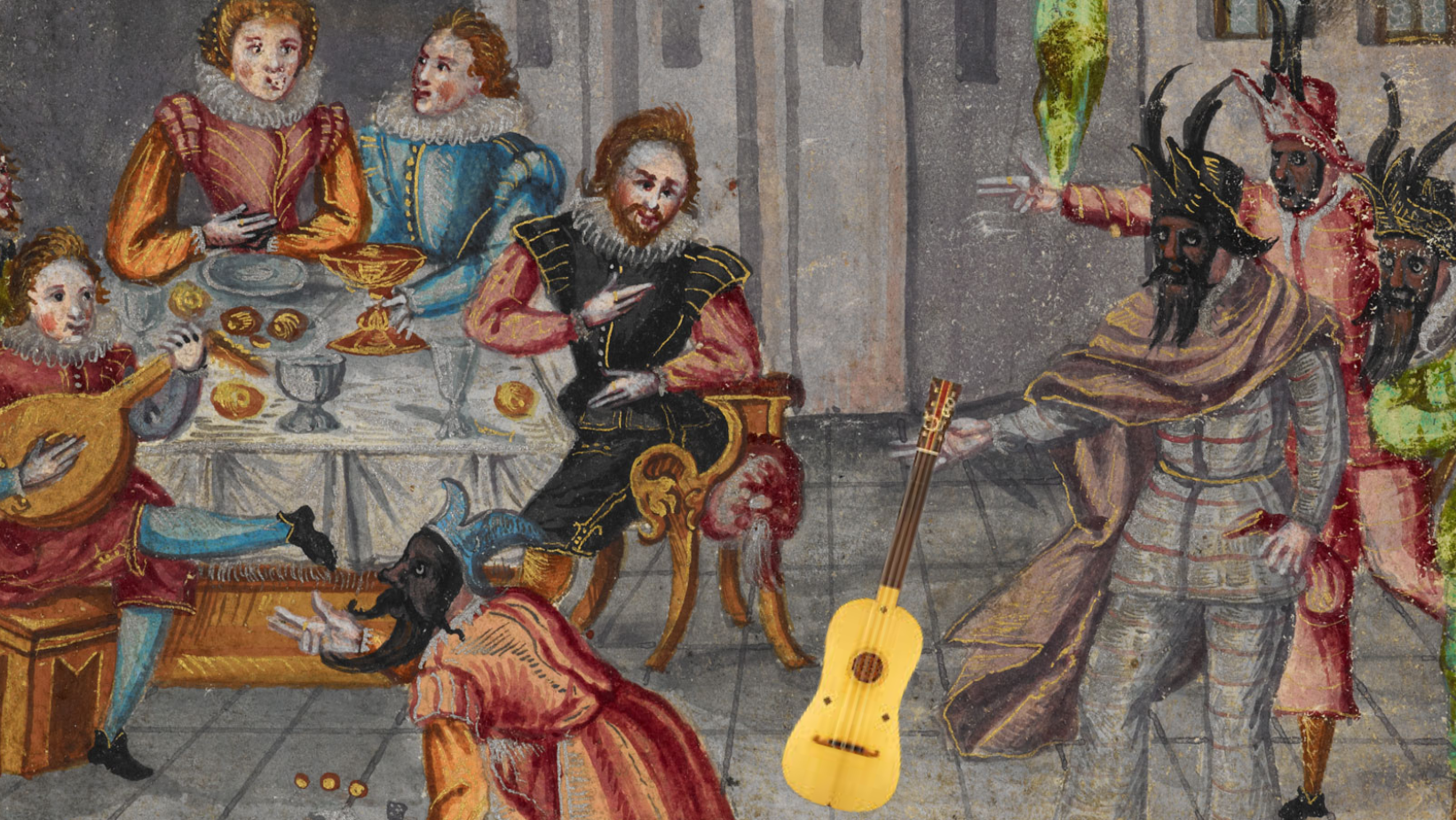
The design and playing style of the guitar experienced significant changes throughout this time. To improve the guitar's tone and playability, instrument designers experimented with various materials, shapes, and string arrangements.
The ability of the instrument to convey melody was enhanced with the inclusion of frets, which allowed for exact finger positioning.
The emergence of lute music throughout the Renaissance also had a significant impact on the evolution of the guitar. Many facets of guitar playing, such as fingerstyle technique and intricate polyphonic compositions, were influenced by the lute, a plucked string instrument with a rounded body and a deep resonance.
The popularity of the guitar increased throughout the Renaissance, especially in Spain and Italy. It became a crucial instrument in vocal music, supplying vocalists with accompaniment and giving songs depth. The guitar is a great instrument for solo and group performances because of its adaptability and expressiveness.
The guitar's development reached a turning point during the Renaissance, opening the way for the creation of the classical guitar that we know and love today.
The guitar rose to prominence as a vocal music accompaniment instrument throughout the Renaissance. Significant alterations were made, such as the installation of frets, gut strings, and a distinctive body design. The instrument was often shown in artwork and was very important to the music at the period.
The classical guitar underwent a dramatic shift in the 18th and 19th centuries. The instrument's tone and playability were transformed by innovations including the six-string design, fan bracing, and the use of metal strings.
Popular guitar composers and virtuosos rose to prominence during this time, enhancing the guitar's standing as a solo instrument.
Francisco Tárrega is among the most significant figures in the development of classical guitar. Tárrega, who was born in 1852, created the groundwork for contemporary classical guitar technique with his compositions and performance style.
He developed fresh methods of phrasing, dynamics, and emotion while expanding the instrument's repertoire. Today's classical guitar scene is still influenced by Tárrega.
The classical guitar continued to develop and gain popularity as a solo instrument throughout the 20th century and continues into the 21st. By composing new pieces and arranging music for other instruments, composers like Andrés Segovia, Julian Bream, and John Williams stretched the frontiers of classical guitar music.
The guitar's position in classical music was cemented by their contributions, which brought it into the world of concert instruments.
Due to its expressive capabilities and unique tone, the guitar is now a preferred instrument among musicians and audiences alike. So, take up a classical guitar, a musical trip spanning the centuries, and immerse yourself in its rich history. The timeless beauty and creative expression of the classical guitar are waiting to envelop you.
P.S. Don't forget to take advantage of the free training portal here...
Classical Guitar Blog Article:
A Quick "9-Step Guide" for Learning Classical Guitar
The classical guitar is a stunning and adaptable instrument that has long mesmerized music lovers. This quick 9-step guide will get you started on the road to classical guitar mastery!
Step 1: Choosing the Right Guitar
Choosing the appropriate instrument is the first step in your journey with the classical guitar. For the finest resonance and tone, look for a guitar with a solid wood top. Make sure the guitar feels comfortable to hold and play, and the right size for your frame. You may make a wise choice by going to a respected music shop and asking a knowledgeable salesperson for advice.
Step 2: Acquiring the Fundamentals
Before you begin playing, make sure you become familiar with the classical guitar's structure and parts, including the body, fretboard, neck, and headstock. Find out the appropriate way to hold the guitar so that it sits gently on your thigh and that your posture encourages calm, secure, and effective playing.
Step 3: Tuning the Guitar
For the classical guitar to produce attractive tones, correct tuning must be achieved. Tune each string to the appropriate pitch, which is E-A-D-G-B-E (from lowest to highest), using a dependable tuner or a tuning app. Your ear will become trained, and your musical sensibility will grow with regular tuning exercise.
Step 4: Practice Simple Finger Exercises
The development of finger dexterity and strength is essential for playing the classical guitar. Start with easy finger drills that concentrate on each finger separately, then add more challenging patterns gradually. Practice fretting individual strings first, then go on to performing scales and fundamental chord forms.
Step 5: Learn Proper Technique
Having the right technique is essential for creating sounds that are both clear and expressive. Practice good posture, finger alignment, and hand and hand placement. Make sure your thumb is in a position that supports your fingers and enables rapid movement around the fretboard by paying close attention to its placement. To learn and hone your technique, get advice from an experienced teacher, or utilize internet resources such as our very own FREE portal…
https://www.learnclassicalguitar.com/Classical-Guitar...
Step 6: Learn to Read Sheet Music
The sixth step is reading sheet music, which is essential for classical guitar. Get to know the staff, notes, rhythms, and symbols used specifically for guitar music in music notation. Simple melodies should be used to build up to more complex compositions. Reading music notation regularly can improve your musical understanding and increase your repertoire.
Step 7: Begin with the Basic Repertoire
Discover beginner-level classical guitar repertoire to put your new knowledge to use. Start with pieces that are simple and were written expressly for beginners, then as you advance, progressively increase the challenge. You will get familiar with a variety of musical genres and methods through working on a wide repertoire.
Step 8: Establish a Practice Routine/Schedule
Establishing a practice schedule is the eighth step in learning how to play the classical guitar. Even if it's only a few minutes a day, schedule devoted practice time. Set aside time for technique, repertory, sight-reading, and other areas that need work throughout your practice session. Over time, a program of regular and focused practice will result in noticeable improvement.
Step 9: Seeking Inspiration and Advice
Think about obtaining the help of a trained classical guitar teacher who can provide you individualized feedback and advice that is catered to your requirements. To discover inspiration and widen your musical horizons, you should also go to performances, check out recordings of well-known classical guitarists, and interact with the classical guitar community.
While learning classical guitar might be challenging, it can also be fun. Your musical exploration will have a solid basis thanks to this step-by-step guide. Remember that you must practice often and with patience if you want to progress. Allow the classical guitar to lead you along a road of artistic satisfaction and embrace the beauty of its extensive repertoire.
Keep in mind to appreciate the trip as you set out on it. Every step you take puts you closer to being the musician you want. Learning the classical guitar is a lifetime endeavor. By establishing objectives and acknowledging minor triumphs along the road, you may embrace the obstacles, enjoy your accomplishments, and maintain motivation.
You'll gradually hear your abilities and musicality improve if you're committed, persistent, and passionate about the instrument. The classical guitar will become a friend who will help you communicate with people via the common language of music, tell tales, and express feelings.
So, take up your classical guitar, follow the instructions in this short guide, and start your adventure. Explore the enormous universe of classical compositions, unleash your creativity, and learn about the fascinating history of the classical guitar.
As you progress, keep in mind that every expert guitarist once began where you are now. Keep yourself motivated, have patience, and enjoy studying and playing classical guitar. Your musical adventure is waiting!
May your classical guitar playing bring you pleasure and contentment and may your fingers dance on the strings and your melodies resound with passion.
Have fun playing!
P.S. Don't forget to take advantage of the free training here...
Recent New Pages:
What is Classical Guitar Playing?
About Contact Privacy Policy Site Map Site Search
Oct 09, 2025
Classical Guitar Lessons Online...For The Guitarist In All Of Us!

Classical Guitar Lessons Online - The right classical guitar information and resources that will make your playing thrive AND save you time and money!
Continue reading "Classical Guitar Lessons Online...For The Guitarist In All Of Us!"
Oct 06, 2025
Free Guitar Lesson Page - With Videos PDF Files And Study Notes

Looking for a Free Guitar Lesson page? Well this is the page you're looking for to help with technique and sound quality in your guitar playing...
Continue reading "Free Guitar Lesson Page - With Videos PDF Files And Study Notes"
Oct 05, 2025
Guitar History, A Dynamic Journey Of An Evocative Instrument

Guitar History Examined...When examining the history of guitar what are some crucial developments that led to its refinement and distinctive sound?
Continue reading "Guitar History, A Dynamic Journey Of An Evocative Instrument"
Dec 19, 2023
Classical Guitar Lessons For Beginners - In Our Online Study Course!

Discover classical guitar lessons for beginners with our comprehensive "Classical Guitar Study Course 3.0". Save time. Save money. Enjoy the convenience...
Continue reading "Classical Guitar Lessons For Beginners - In Our Online Study Course!"
